



Summary
Ball tracking is a common measurement modality and surrogate for performance across professional baseball. Statcast runs in every MLB stadium. Systems like Rapsodo and TrackMan are common in bullpens and hitting labs. Hawk-Eye camera systems support broadcast tracking and front-office analysis. Even at the college and high school levels, radar units and camera-based systems are showing up more often.
The data these tools produce is raising the standard for training and player development. As a result, players and executives expect detailed analyses that range from spin rate to exit velocity, and sports science professionals are on the hook to deliver.
Yet as sophisticated as these devices are, a persistent gap remains between action and outcome: ball tracking tells you what the ball did (i.e., the outcome), but it does not show you what the athlete’s body did to produce it (i.e., the action). A pitcher might suddenly lose two miles per hour on the fastball. A hitter might gain exit velocity after changing something in the swing. How do we explain these outcomes as sports science professionals?
That gap matters more than it might seem. The physical chain that connects mechanics to what the ball does is long and complicated. Pitch velocity comes out of a coordinated sequence through the body: hips rotate, the trunk follows, the elbow extends, the shoulder internally rotates and the hand delivers the ball with a particular grip and wrist action.
Small adjustments anywhere in that sequence can change what the ball does.
Hitting has a similar complexity. Bat path, attack angle, and contact location all influence the result, and the actual contact between bat and ball plays out in just a few milliseconds.
For researchers and performance staff trying to connect those two pieces, it helps to understand the different classes of technology that exist and what situation might warrant the use of one tool over the other.
This article looks at how radar and camera-based ball tracking systems work, their pros and cons, and why there is a growing interest in linking ball tracking with biomechanical measurement in both research labs and professional baseball environments.
Why Ball Tracking Matters in Baseball Performance Environments
Ball tracking data now sits at the center of several core workflows in modern baseball. On the pitching side, metrics like spin rate and movement profiles guide pitch design. Coaches use them to figure out things like whether a breaking ball has the right axis tilt, or if a sinker has enough drop to generate weak ground balls. Velocity is another measure that coaches carefully monitor, both as a performance marker and as a signal of how a pitcher’s workload is progressing.
On the hitting side, exit velocity and launch angle have become common reference points when evaluating swing mechanics. As batted-ball tracking has spread across the game, there has also been a growing focus on things like attack angle and contact quality, and how swing mechanics translate into those outcomes.
When it comes to research, ball tracking has opened the door to much larger studies of pitching and hitting mechanics. Researchers can now analyze patterns across large groups of pitchers and hitters instead of relying on small lab samples. Pitch modeling work has connected ball flight to things like spin efficiency, seam orientation, and release characteristics. In biomechanics labs, ball velocity often shows up as a key outcome variable when studying how different movement patterns relate to arm stress. Batting research has taken a similar approach, looking at how swing kinematics influence batted-ball outcomes across different pitch types and locations.
Across these environments, teams and researchers tend to track a similar set of ball metrics. That usually includes pitch velocity at release and near the plate, spin rate and active spin, horizontal and vertical movement, and extension off the rubber. On the hitting side, the focus shifts to exit velocity, launch angle, spray direction, and projected distance.
Taken together, these data describe how the ball acts when it leaves the pitcher’s hand or comes off the barrel of the bat.
The Core Challenge
Ball tracking is built to measure outcomes. It tells you what the ball is doing at release or right after contact. What it does not show is the mechanical process that produced that result. It cannot see the sequence of joint motions, how fast different body segments are moving, or how the timing of those movements lines up. Those pieces are what connect the work an athlete does in training to what eventually shows up in performance scenarios.
That creates a challenge for coaches and sports science professionals. When performance changes, they need to figure out what caused it, adjust mechanics, and design training that actually moves the needle.
“Ball data shows what the outcome was. Body data explains how it happened.”
How Radar Ball Tracking Works

Radar ball tracking is built on Doppler radar principles. A radar unit sends out a microwave signal at a known frequency. When that signal hits a moving object, like a pitched or batted baseball, it reflects back with a slightly different frequency. The faster the ball is moving toward or away from the radar, the bigger that shift becomes. By measuring that change, the system can calculate the ball’s speed with very high precision.
Radar systems are especially good at measuring velocity because the frequency shift scales directly with speed, and the reading happens almost instantly. This is why radar guns have been the standard tool for measuring pitch speed for decades. Systems used in both professional and amateur baseball, such as Stalker or Bushnell radar guns, rely on this same principle to deliver velocity readings almost immediately after the ball leaves the hand.
Some modern ball tracking systems build on those basic radar measurements. Portable units like Rapsodo combine radar with optical sensors to estimate additional metrics such as spin and aspects of the ball’s trajectory.
Other systems extend beyond simple velocity readings by tracking the ball throughout its flight. By following the ball’s motion over time, these systems can reconstruct its trajectory and derive additional metrics inferred from how the ball moves through space.
Strengths and Limitations of Radar Systems
What radar does well
Radar’s biggest strength is velocity measurement. Doppler radar can measure the ball speed down to fractions of a mile per hour with almost no delay. That means very reliable velocity tracking from release to the plate. Radar also holds up well in different environments. It works indoors or outdoors and is largely unaffected by lighting conditions, which can be an issue for some camera-based systems.
Another advantage of radar ball tracking systems is how quickly radar captures changes in speed. Because it measures velocity directly from the returning signal, it does not need to reconstruct movement across multiple frames the way camera systems do. That makes radar very good at picking up fast changes during ball flight. For example, the way a breaking ball slows down and curves as it travels can be captured through the continuous radar signal.
Radar ball tracking systems can also provide useful spin-related metrics. Platforms like TrackMan estimate spin rate by combining radar measurements with trajectory modeling. Those spin estimates have become a key input for pitch classification, predicting pitch movement, and helping pitchers shape new pitches during pitch design work.
Where radar falls short
Radar’s biggest limitation is simple: it tracks the ball, not the athlete.
The radar unit sees a moving object and measures how fast it is traveling, but it cannot see what the pitcher’s arm is doing, how the hips and shoulders are sequencing, or what the hitter’s swing plane looks like. It cannot capture any of the movement that happens before the ball leaves the hand or meets the bat. So when the question becomes mechanical, like why a pitcher’s velocity dropped or what part of a hitter’s swing is limiting exit velocity, radar alone cannot provide the answer.
There is also a workflow issue: radar systems typically produce their own separate data streams. Velocity and spin data live inside the radar platform, while biomechanics data might be coming from a motion capture system or a high-speed camera. Connecting those datasets often means syncing timestamps, aligning coordinate systems, and stitching together outputs from multiple systems. For researchers or performance staff trying to link mechanics to ball outcomes, the extra step can add real friction to the analysis process.
How Camera-Based Ball Tracking Works
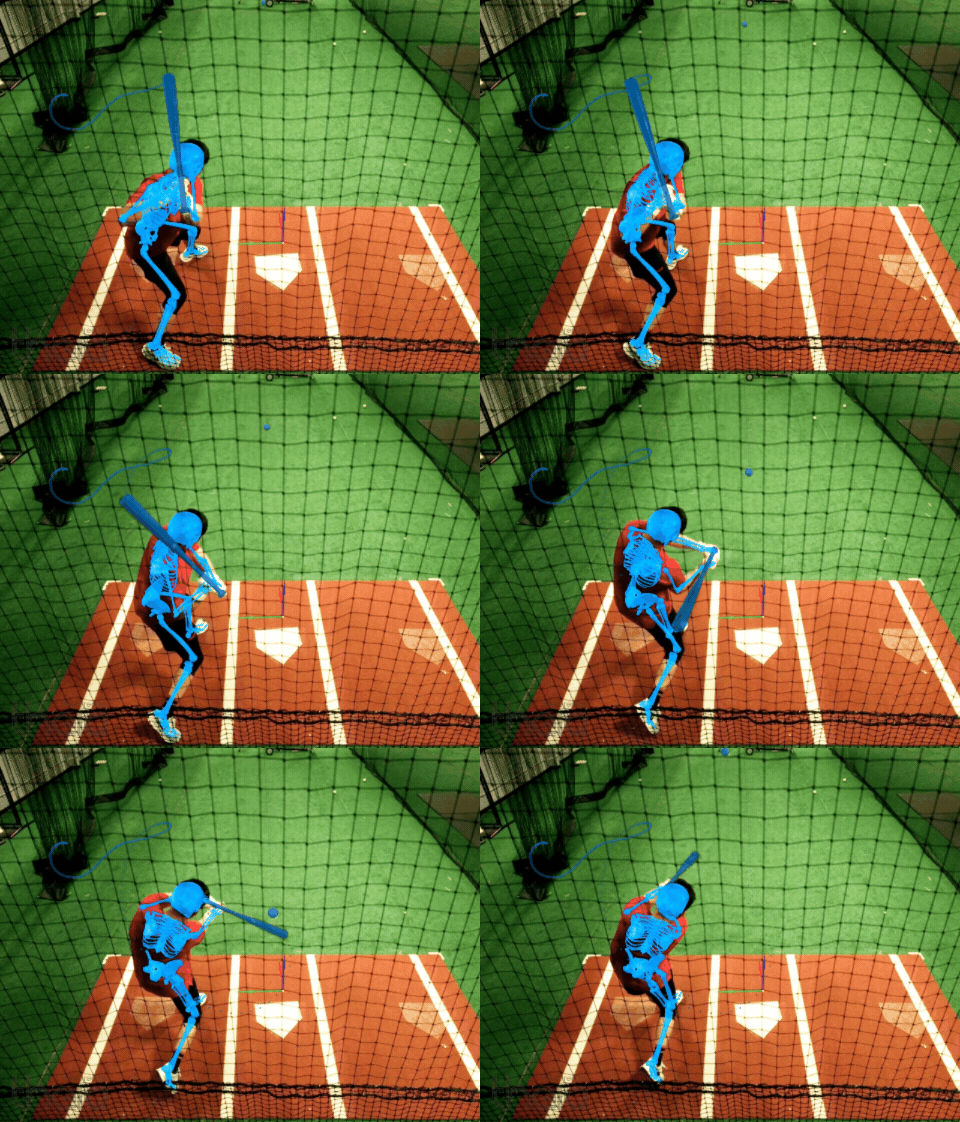
Camera-based ball tracking works very differently from radar. Instead of reading a signal bouncing off the ball, optical systems figure out where the ball is in space by looking at it from multiple camera angles at the same time. When the same ball shows up in two or more calibrated cameras in the same frame, the system can triangulate its position in three-dimensional space. It is essentially the same geometric idea behind how human vision judges depth using two eyes.
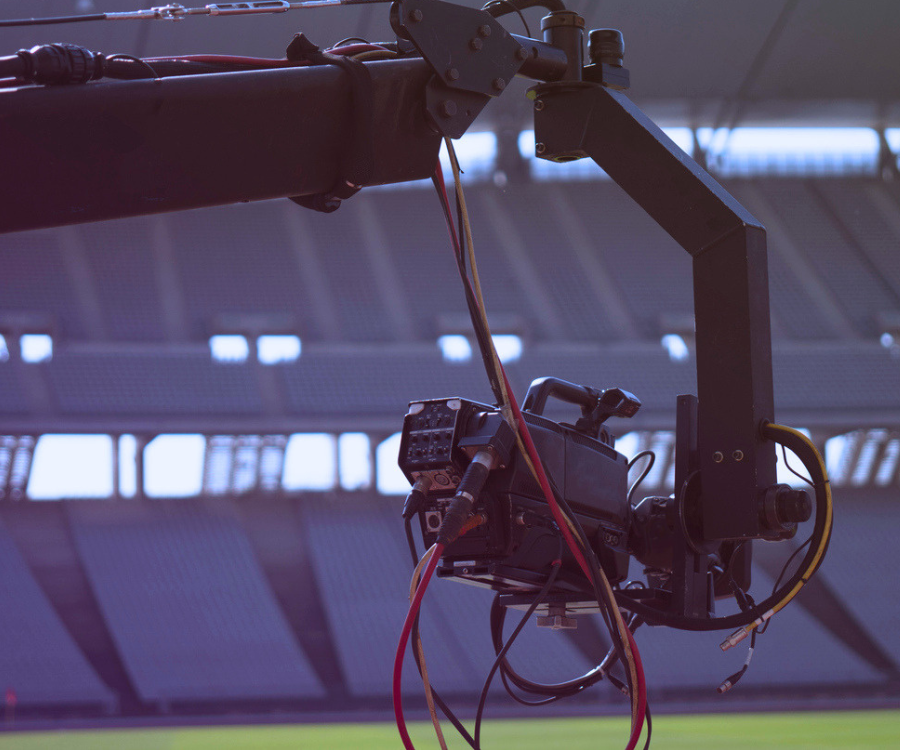
Modern optical tracking platforms such as Hawk-Eye use arrays of high-speed cameras positioned around the field. Each camera records the ball’s position frame by frame. The system then combines those views to reconstruct the ball’s path through space on a continuous 3D trajectory. With high enough frame rates, usually hundreds of frames per second, the resulting flight path can be mapped with very high spatial detail.
In simple terms, camera systems capture the spatial story of the ball. They show where the ball was, where it went, and how it moved through space to get there. That geometric view of the flight path is what makes optical tracking especially valuable for trajectory analysis.
Another important difference from radar ball tracking systems is that camera ball tracking systems see the entire scene, not just the ball. A multi-camera setup that tracks the ball can also capture the pitcher, the hitter, and the bat in the same space and time frame. Radar cannot do that. Once these data are aligned in the same coordinate system, connecting actions to outcomes gets a lot more straightforward.
Strengths and Limitations of Camera-Based Tracking
What camera systems offer
The biggest advantage of camera systems is that they can reconstruct the full 3D flight path of the ball. Instead of estimating trajectory from one sensor, multiple cameras see the ball at the same time and triangulate its exact position in space. That means you are working with the ball’s real coordinates in the world, not just estimates pulled from a signal.
For researchers or performance staff looking at pitch shape or ball flight, that detail matters. You can look directly at things like release position, the approach angle into the plate, or exactly how a pitch is moving through space.
Camera systems also give you a much fuller picture of what is happening on the field. A camera array watches the whole scene, not just the baseball. That is how systems like Statcast can track the ball while also tracking every defender moving around the field.
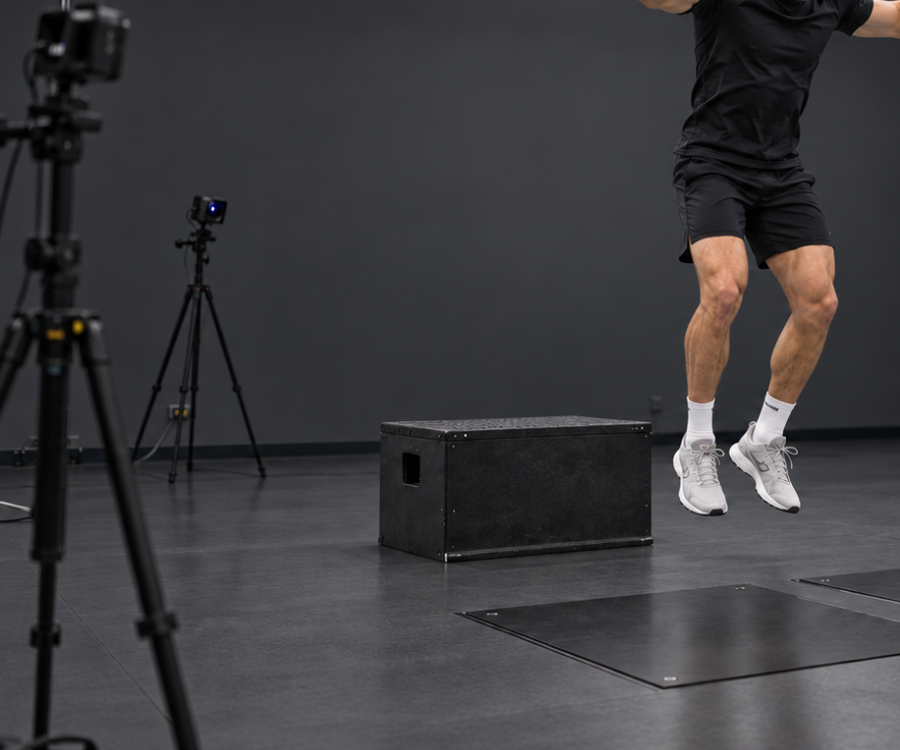
In controlled environments like biomechanics labs or player development facilities, that same setup can also capture the bat, the pitcher’s hand at release, and the athlete’s body in the same measurement space.
Once everything lives in the same coordinate system, you can start connecting mechanics to ball flight in a much more direct way.
Practical considerations
Like any measurement system, camera tracking depends on a solid capture setup. Cameras need to be positioned correctly and calibrated so the system understands the measurement space. Once that calibration is established, the system can reconstruct motion and ball flight within that shared coordinate system.
Ball speed is another practical factor. A baseball moving at pitching velocities occupies only a small portion of each camera frame, so systems rely on high frame rates and appropriate shutter speeds to capture the ball cleanly through flight. Modern camera systems are designed with this in mind and can track fast-moving objects reliably when configured correctly.
Spin measurement is somewhat more complex for camera systems. Directly measuring spin requires enough visual resolution to detect the ball’s seam rotation, which can be technically demanding depending on the setup. Because of this, many tracking systems estimate spin characteristics from the shape of the ball’s trajectory through the air, an approach that is also used in radar-based systems.
Radar vs Camera-Based Ball Tracking: What Each System Measures
The differences between radar and camera tracking become clearer when comparing what each system actually measures.
* Easily integrates with external systems to incorporate pitch type, outcomes, and other contextual data for deeper analysis.
Interpretation Note
The partial marks (◐) in this table are not meant as criticisms. Different tracking systems are designed for different measurement tasks, and performance can vary on the specific platform and setup.
The Missing Link: Connecting Ball Outcomes to Biomechanics
Ball tracking systems are designed to measure outcomes. They describe what the ball did after it left the pitcher’s hand or the bat’s barrel. But those outcomes are produced by a much longer mechanical chain. Pitch movement depends on spin axis, spin rate, and release characteristics, which in turn come from the pitcher’s arm path, wrist position, and timing. Exit velocity and launch angle depend on bat speed, attack angle, and contact quality, which are driven by swing mechanics. When ball metrics change, the data shows the result, but it rarely explains the mechanical reason behind it. Understanding those causes requires measuring the athlete’s movement as well as the ball.
Why Integrated Tracking Is Becoming Important
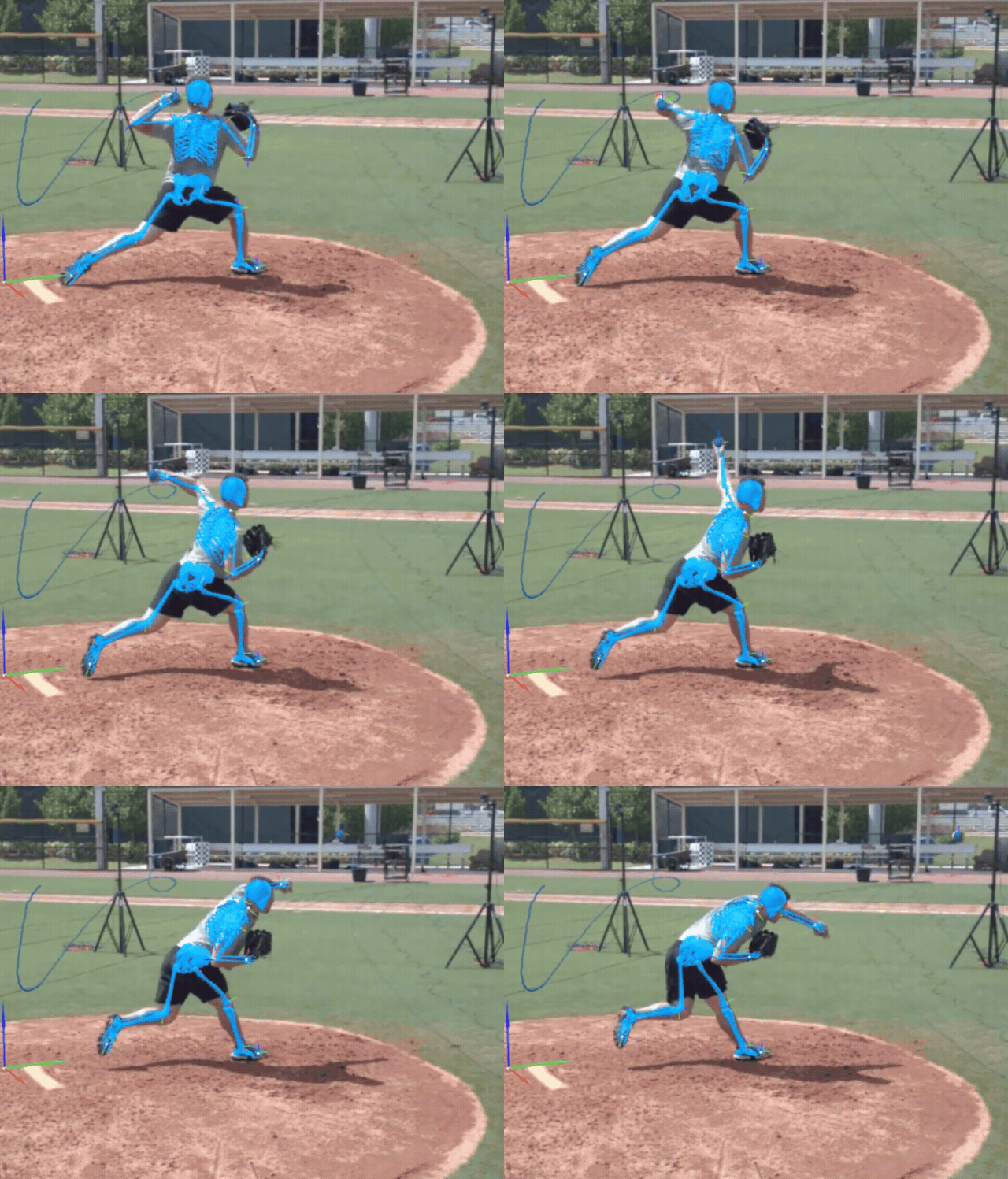
What’s missing is not more data, but connection between datasets. Because of this, many researchers and performance teams are increasingly interested in measurement environments where body motion, bat motion, and ball flight are captured together. When those measurements exist in the same coordinate system, the relationship between mechanics and outcomes becomes much clearer. Analysts can directly connect events in the kinematic chain to the resulting pitch movement or batted-ball trajectory, rather than trying to link separate datasets collected by different systems.
The Future of Baseball Measurement
Sports measurement technology is gradually moving toward integrated systems rather than isolated sensors. Radar ball tracking systems, motion capture systems, and camera-based ball tracking systems have each become highly sophisticated on their own, but the next step is connecting them into unified datasets.
Systems capable of capturing the athlete, the equipment, and the ball within the same measurement framework allow analysts to move beyond describing ball outcomes and begin understanding the mechanics that produce them.
Key Takeaways
• Radar systems measure ball velocity extremely well and estimate spin and movement from ball flight, but they do not observe the athlete or the bat.
• Camera-based systems reconstruct the full 3D flight path of the ball and operate on video infrastructure that can also capture athlete motion and equipment movement.
• Most tracking technologies focus on ball outcomes. Understanding why those outcomes occur requires measuring the athlete’s mechanics as well.
• Many of the most important questions in baseball performance — changes in velocity, spin efficiency, or exit velocity — require linking body mechanics to ball behavior.
• Integrated tracking environments, where body motion, bat movement, and ball flight are captured within the same coordinate system, are becoming increasingly valuable for both biomechanics research and player development.