




Summary
Is Markerless Motion Capture Portable?
One of the most common questions we hear from research teams and performance labs evaluating Theia3D is: can you actually take this system into the field?
The short answer is yes. But portability means different things in different contexts, so this post unpacks what field deployment with Theia3D actually looks like in practice — and what it requires.
What Portability Means for Markerless Motion Capture
Unlike traditional marker-based systems that are tightly coupled to infrared camera arrays and controlled lab environments, Theia3D works with standard synchronized RGB video cameras. This means the system can be deployed wherever cameras can be physically mounted and connected.
Research teams have successfully used Theia3D in:
- Outdoor athletics tracks and sports fields
- Gymnastics facilities and ice rinks
- Batting cages and baseball stadiums
- Community research settings and sports medicine research sites
- Occupational environments for workplace biomechanics research
What Field Deployment Requires
Portability isn’t free — it requires planning. The key requirements for field-based Theia3D deployment are:
- Synchronized cameras: At least 6 cameras (8+ recommended) with hardware synchronization and adequate resolution
- Calibration: A calibration sequence must be performed in each new environment
- Lighting: Adequate, consistent lighting for the cameras to capture clear video
- Processing hardware: A computer with a supported NVIDIA GPU for post-processing (processing does not need to happen on-site)
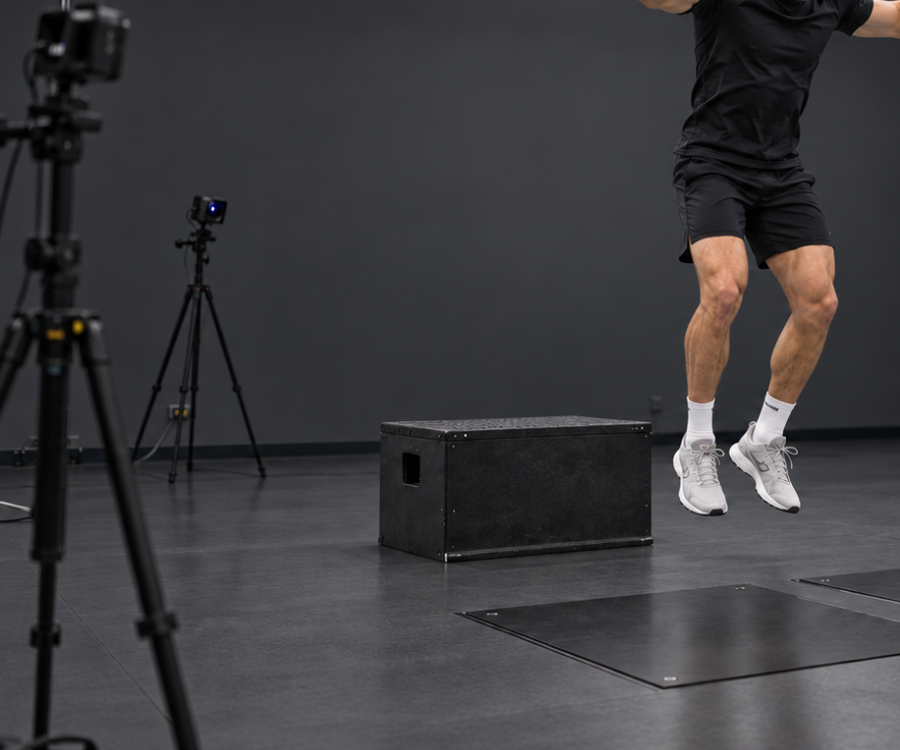
Camera systems from Qualisys, Vicon, and other vendors can be used, provided they meet Theia3D’s synchronization and resolution requirements. Many research teams use transportable camera setups on rolling tripods or mounted on lightweight structures.
Practical Portability in Action
Peer-reviewed studies using Theia3D in field environments include baseball pitching and batting research at MLB venues, community-based gait biomechanics research in older adults, pediatric movement research in school and community settings, and occupational biomechanics research in workplace environments.
The system’s software processes data locally and never transmits video to external servers, which is important for research teams working with sensitive participant data in community settings.
Contact us to discuss field deployment options for your specific research environment.