

.png)

Summary
A new systematic review published in Artificial Intelligence in Medicine evaluated the accuracy, validity, and reliability of Theia3D markerless motion capture across existing peer-reviewed studies. The review analyzed 16 studies involving 303 participants and compared Theia3D measurements to traditional motion capture systems such as Vicon and Qualisys.
Overall, the review found that Theia3D demonstrates reasonable-to-strong validity and reliability for many biomechanical measurements, particularly spatiotemporal gait parameters and sagittal-plane joint kinematics. However, the authors note that differences in biomechanical models and comparison methods can influence results, particularly for pelvis and hip motion, and transverse-plane rotations.
The findings suggest that markerless motion capture is a promising and increasingly credible alternative to traditional marker-based systems for studying human movement in clinical, research, and sport environments.
Why This Matters
For decades, biomechanics research has relied on marker-based motion capture systems, which require reflective markers, controlled lab environments, and extensive setup time.
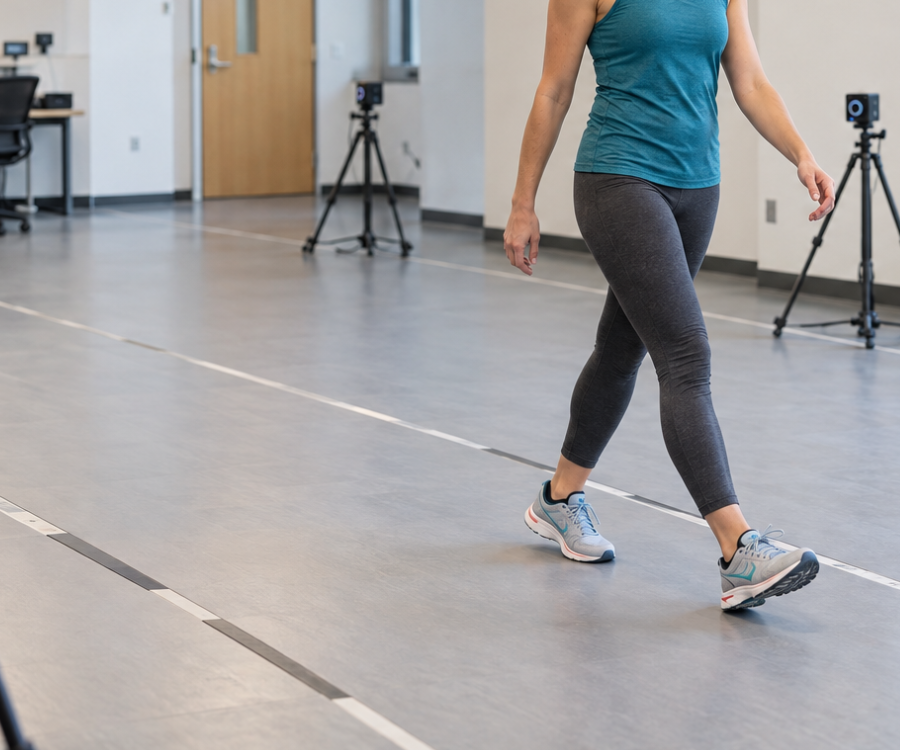
Markerless motion capture systems like Theia3D aim to remove these barriers by allowing researchers and clinicians to:
- Capture 3D motion using synchronized video cameras
- Analyze movement without markers or specialized suits
- Study movement outside labs
- Scale biomechanical analysis to larger, more meaningful sample sizes
Independent validation studies are critical for determining whether markerless systems can provide research-grade accuracy comparable to established technologies and gain acceptance as a suitable alternative.
This systematic review brings together the growing body of evidence evaluating Theia3D.
Study Overview
The researchers conducted a systematic literature review following PRISMA guidelines, searching five major databases for studies evaluating Theia3D.
- Key details:
- 16 studies included
- 303 total participants
- Participants included healthy adults, children, and clinical populations
- Studies evaluated:
- Accuracy
- Validity
- Reliability
Most studies compared Theia3D outputs to established motion capture technologies including:
- Vicon (n=4)
- Qualisys (n=6)
- Motion Analysis Corp (n=1)
- Pressure-sensitive walkways (n=2)
Functional movements analyzed included:
- Walking (most common)
- Running
- Jumping
- Balance tasks
- Squats and stepping movements
Key Findings
- Strong validity for many gait measurements
Spatiotemporal gait parameters measured using Theia3D showed excellent agreement with reference systems.
Examples include:
- Gait speed
- Step length
- Stride length
Many measurements demonstrated intraclass correlation coefficients (ICC) greater than 0.9, indicating excellent validity and reliability.
- Good agreement for many joint kinematics
Across gait, running, and jumping tasks:
- Knee and ankle joint angles often showed excellent to reasonable accuracy
- Typical errors were between ~2-7 degrees, depending on the joint and plane of motion
These levels of agreement are comparable to typical variability observed between motion capture systems.
- Larger differences observed for hip motion
Some measurements showed larger discrepancies between Theia3D and marker-based systems:
- Hip flexion/extension
- Joint rotations in the transverse plane
These differences may reflect modeling differences between markerless and marker-based approaches, rather than tracking accuracy alone.
Marker-based systems themselves can introduce errors due to:
- Soft tissue artifact
- Marker placement variability
- Occlusions
This makes comparisons between systems complex.
- Reliable measurement across sessions
Studies evaluating repeatability found that Theia3D demonstrates reasonable inter-session reliability for lower-limb kinematics.
Typical variability ranged between:
- ~1°–3.7° across sessions
This level of reliability is comparable to commonly accepted ranges in gait analysis.
- Strong potential for real-world movement analysis
One study included in the review demonstrated successful motion capture using Theia3D in community and clinical environments outside the lab, highlighting the potential for markerless systems to enable more accessible biomechanical assessment.
What This Means for Biomechanics Researchers
This systematic review suggests that markerless motion capture is reaching a level of maturity suitable for many biomechanics applications.
The review suggests that Theia3D is particularly well suited for:
- Gait analysis
- Sports biomechanics research
- Movement studies outside laboratory environments
- Large-scale biomechanical data collection
However, the authors emphasize that further research is still needed, particularly:
- Standardizing biomechanical models used across systems
- Validating performance in clinical populations
- Increasing transparency around AI training data and algorithms
As the body of validation research continues to grow, markerless motion capture may play an increasingly important role in scaling biomechanics research beyond traditional labs.
Read the full study here.
Interested in markerless motion capture for biomechanics research?
Contact us today to see how Theia3D enables high-fidelity 3D motion capture using video without markers or specialized suits.